
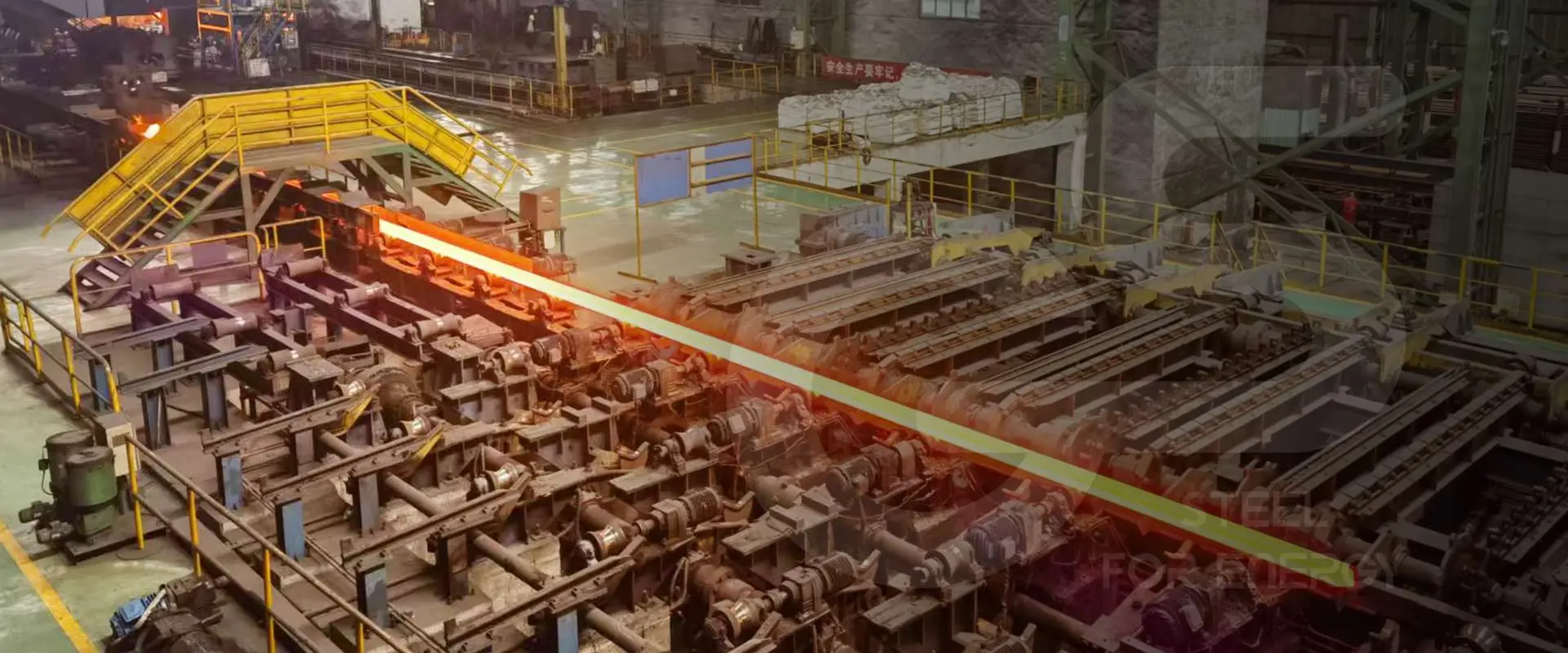
Under API Specification 5CT, 11th Edition, four things arrive without you asking: marking per clause 10, grade colour identification per 10.4, an external coating rated to protect against rust in transit for at least three months (11.1.1), and Annex F Class B thread protectors (11.2.1). Everything else in the marking and protection package — Class A protectors, additional markings, pipe coatings, long-term storage coating, driftable protectors — is either a purchaser-specified option or a mutual agreement item. (Thread compound itself is not optional: 7.14.1 requires it on the engaged and exposed threads. What is negotiable is which compound and how it is applied.) If it is not on the purchase order, the mill ships without it and is fully compliant.
ZC Steel Pipe supplies casing from 4½″ to 20″, tubing from 1.050″ to 4½″, and couplings, into West and North Africa, the Middle East, South America and Southeast Asia — mostly by container and breakbulk with 60 to 90 days between the threading floor and the customer's laydown yard. That transit window is why this page is written for the person holding the PO at the rack rather than the person writing the stencil at the mill.
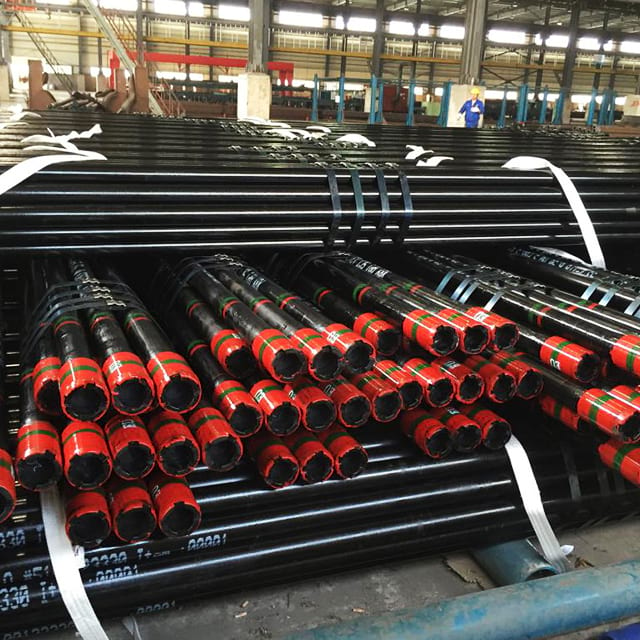
Casing bundles banded and protected for shipment — protector class, colour bands and body stencil are all verifiable before the strapping comes off.
Automatic, specified, or agreed — the three levels
API 5CT sorts the marking and protection package into three levels, and mixing them up is the single most expensive habit in OCTG receiving. Level 1 comes with the pipe. Level 2 lives in Table 2, "Optional Requirements Specified by the Purchaser (Casing)" (Table 5 is the tubing equivalent) — you name it on the PO and you are entitled to it. Level 3 lives in Table 3, "Purchaser/Manufacturer Agreement (Casing)" (Table 6 for tubing) — the mill has to agree, and a line on your PO is an opening position rather than an entitlement.
| Level | What it covers | Clause |
|---|---|---|
| Automatic | Baseline marking sequence | 10 |
| Automatic | Grade colour identification | 10.4 |
| Automatic | External coating rated ≥ 3 months for transit | 11.1.1 |
| Automatic | Annex F Class B thread protectors | 11.2.1 |
| Purchaser-specified (Table 2) | Class A or customer-supplied thread protectors | 11.2.1 |
| Purchaser-specified (Table 2) | Additional markings | 1.5, 10 |
| Purchaser-specified (Table 2) | Pipe coatings | 11.1 |
| Purchaser-specified (Table 2) | Alternative drifting requirements | 7.10 |
| Purchaser-specified (Table 2) | Casing with couplings detached · seal-ring couplings | 7.14, 8.8 |
| Mutual agreement (Table 3) | Marking requirements | 10 |
| Mutual agreement (Table 3) | "Marking only with bands on Grade L80 3Cr couplings and pup joints with surface treatment" | 10.4.2–10.4.5 |
| Mutual agreement (Table 3) | Driftable thread protectors | 11.2.4 |
| Mutual agreement (Table 3) | Thread and storage compound | 7.14 |
| Mutual agreement (Table 3) | Coupling certification included with pipe certification | 12.3 r) |
| Mutual agreement (11.1.2) | Long-term storage coating | 11.1.2 |
One row sits slightly apart. Long-term storage coating is not itemised in Table 3; the purchaser lever in Table 2 is the broad entry "Pipe coatings" against the whole of 11.1, while 11.1.2 itself opens "by agreement between the purchaser and the manufacturer." So it behaves like a Level 3 item because the clause says so, not because a table lists it.
Read the middle block as your shopping list and the bottom block as your negotiation list. The practical difference shows up in a claim: if you specified Class A protectors on the PO and Class B arrived, you have a straightforward nonconformity. If you wrote "long-term storage coating required" on the PO and the order acknowledgement never came back agreeing to it, you have a conversation, not a claim.
The correction worth making before your next RFQ: several supplier pages state that the 11th Edition "mandates Class A or Class B thread protectors." Clause 11.2.1 says something narrower — all protectors supplied by the threading entity shall meet Annex F Class B unless a Class A protector is specified in the purchase agreement. Class B is the floor; Class A is a paid upgrade. A buyer who reads the vendor version thinks protector class is settled by the standard and never puts it on the PO, which is exactly how you end up paying Class A freight risk on Class B hardware.
Clause numbering: marking is section 10, not section 11
In the 11th Edition, marking is clause 10 and coating and protection is clause 11. Several widely-cited pages number marking as 11.x, which is 9th and 10th Edition numbering that was never updated. This sounds pedantic until an inspector writes "marking not per 11.1" on a nonconformance report and the mill's QA answers, correctly, that 11.1 is about coating. Quote clause numbers with the edition attached, or quote the requirement text instead of the number.
Reading the marks on arrival
Marking is applied by stenciling, or by stenciling and stamping, at the manufacturer's option (10.1.4). If your project needs hard stamping — common where pipe will be sandblasted or re-coated downstream and stencils will not survive — the purchaser can require stamping by agreement, in which case both stamping and the stencil must be used (10.1.4a). Alternative marking systems are permitted, but if the system could alter mechanical or corrosion properties, the manufacturer's process control has to be validated to show that sour-service cracking resistance and surface hardness are maintained and that no defects are created (10.1.4c). That last sentence is a procurement lever on sour-service orders: ask what marking method is used and, for anything other than stenciling, ask for the validation.
What the marks have to give you:
- No overlap, no injury to the product (10.1.5). Overlapping stencils are a legitimate hold — they are a common cause of a heat number that cannot be read six months later.
- Compatible-standard markings sit after "API 5CT" (10.1.6). If a joint carries both API 5CT and another standard, the sequence tells you which one governs.
- Re-marked pipe carries
transferred by << >>with the responsible entity's name inserted (10.1.7). If you see a heat identity with no transfer notation on pipe that has obviously been re-marked, stop there. - Date of manufacture is MMYY with a hyphen or slash —
05-12or05/12is May 2012 (10.1.8). - During an edition overlap, the edition number follows the date —
05-24-11EDor05/24/11EDfor the 11th Edition (10.1.9). After the new edition takes effect, edition marking is at the manufacturer's discretion, and it applies to the pipe body, not to API 5B changes. - Processed pipe has the prior grade identity and the original mill's name or logo removed (10.1.2). Finding two grade identities on one joint is a traceability failure, not a bonus.
Finished couplings and accessories carry a mandatory marking sequence of their own (Table C.43). What 10.1.11 governs is coupling material and accessory material: that marking is set either in the purchase agreement or, for coupling material, by the manufacturer's own internal marking requirements — but either way it must remain traceable, as a minimum, to the standard, the manufacturer, the date of manufacture and the grade. If you need coupling-material marking specified your way rather than the mill's, the PO is the only place to say so. For the full coupling marking sequence and the dimensional side of coupling supply, see API 5CT casing and tubing couplings →.
Thread type appears as a two-letter symbol, and it is worth knowing them cold because it is the fastest way to catch a wrong-connection shipment before the strapping comes off:
| Symbol | Thread type |
|---|---|
| SC | Short round |
| LC | Long round |
| BC | Buttress |
| NU | Non-upset |
| EU | External upset |
| IJ | Integral joint |
Two letters is all that separates an LC string from a BC string on a body stencil. On mixed orders, we ask the yard to sort by symbol before counting, because a miscount of 40 joints of LC into a BC tally is discovered on the rig floor otherwise.
Reconciling the body stencil against the mill test certificate — heat number, grade, date — is a separate exercise with its own failure modes; the mechanics of that check are covered in the mill test certificate and EN 10204 guide →.
Colour bands, and what they mean on the coupling
Colour identification is the fastest grade check on a rack, and the band has to be painted within 0.6 m (24 in.) of the coupling or internally threaded end; on plain-end or pin-by-pin pipe, within 0.6 m of either end (10.4.2 a, b). The grade-to-colour chart itself lives on the grade page — see OCTG grades N80, L80, P110 and Q125 → for the full colour table.
The coupling rules are where receiving inspections actually go wrong, and they are not in that chart:
- Couplings are painted around the entire outside circumference, colour bands included — except L80 3Cr, 9Cr and 13Cr.
- L80 9Cr and 13Cr couplings carry bands only, at a band width of 12.7 mm (1/2 in.) — no full painting (10.4.2 d).
- L80 3Cr is fully painted by default, but moves to bands only at 12.7 mm by agreement when the coupling is surface treated, for example plated.
- Special-clearance couplings carry an additional black band (Table C.41, footnote b).
- Seal-ring couplings carry an additional blue band (Table C.41, footnote c).
- Coupling faces need not be painted (note under 10.4.2 c).
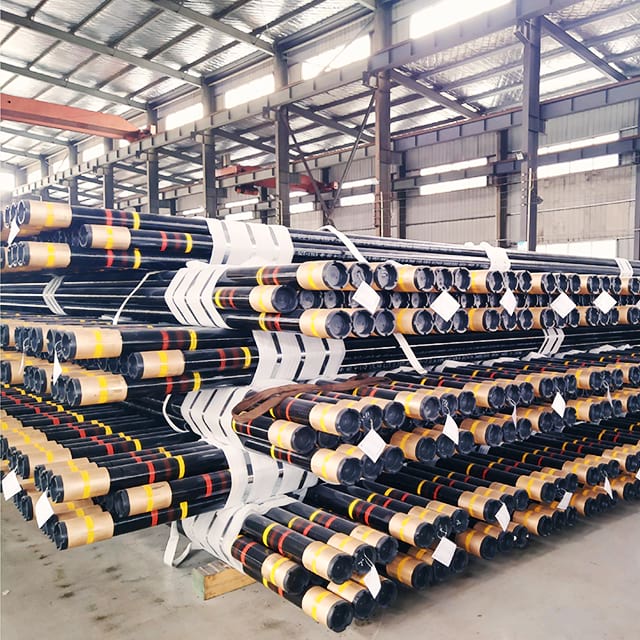
Colour bands within 0.6 m of the coupling end, protectors fitted, tags attached — the condition pipe should be in when it reaches your rack.
What we see on 13Cr orders: the two most frequent receiving queries we get on L80-13Cr casing are "why are the couplings not painted" and "the faces are bare, is this a coating miss." Neither is a defect — 9Cr and 13Cr couplings are banded, not painted, and faces are exempt. On a 4½″ L80-13Cr premium casing supply into North Africa → we now send the clause 10.4.2 extract with the pre-shipment inspection pack, because answering it once at the mill costs a paragraph and answering it at the port costs a week.
Transit protection and storage protection are two different purchases
Clause 11.1.1 gives you an external coating for rust protection in transit, rated to protect for at least three months. Coupling stock, coupling material and accessory material are supplied bare by default, apart from a protective coating that may be applied over the stencil. Bare pipe, or specially coated pipe, has to be specified in the purchase agreement — and for special coatings the PO must also state whether the coating runs full length or leaves a specified uncoated distance from the end. Bare ends are commonly oiled for transit.
Clause 11.1.2 is a different animal. Long-term storage coating, internal or external, exists only by agreement between purchaser and manufacturer, is defined against the storage period the two parties agree, and has four application parameters that both sides have to assess: pipe dryness, pipe cleanliness, application temperature, and coating film thickness. Two properties of a compliant storage coating matter to the field: minor surface discoloration is acceptable, and the coating must not require removal before the tubulars are run. If a vendor offers a storage coating that has to be washed off before running, it is not what clause 11.1.2 describes.
The three-month clock, worked
The rating is three months of transit protection. API 5CT does not say when that clock starts — which is itself worth fixing on the order, because every party to a claim will place day 0 wherever suits them. The example below takes release from the threading floor as day 0; the dates are assumptions you should replace with your own project's numbers.
- Pipe released from the threading floor, day 0
- Consolidation and inland haul to load port: 14 days
- Ocean transit to a West African port: 35 days
- Port congestion and customs clearance: 21 days
- Inland move to the operator's laydown yard: 7 days
That is 77 days of the roughly 90 the coating is rated for, consumed before a joint reaches the rack. The pipe is still compliant, and the coating is still inside its rating — but only by about a fortnight. The yard is now holding an item whose transit protection lapses within two weeks of arrival, against a protector storage period that clause 11.2.2 frames as roughly one year. Nothing in API 5CT reconciles that mismatch for you — the PO has to.
13% Cr tubulars and moist storage. API 5CT notes that 13% Cr tubulars have shown a tendency toward localized pitting corrosion when stored in moist environments, and that special precautions during coating, shipping and storage are worthwhile. On coastal yards this is the one place where paying for clause 11.1.2 storage coating up front is easier to justify than arguing about pit depth on arrival. The metallurgy behind it is covered on the L80-13Cr casing and tubing page →.
Thread protectors: Class B is the floor
Protectors are applied by the entity performing the threading (11.2.1), and the default is Annex F Class B. Class A applies only if the purchase agreement specifies it, and the customer may supply protectors that do not conform to Annex F at all — again, only if the purchase agreement says so.
Coverage is defined, not decorative: external protectors cover the full thread length, internal protectors cover the equivalent total internal thread length, and the protector must inhibit dust and water infiltration during transport and through a normal storage period of about one year (11.2.2). The protector's own thread form must not damage the product threads. Protectors are not required on pup joints and accessories where packaging protects the threads instead — worth knowing before you reject a pup joint → delivery for bare threads inside a sealed crate.
Two clauses do most of the work in receiving:
- 11.2.3 — bare steel thread protectors shall not be used on L80 9Cr and 13Cr. This is a prohibition, not a preference. If a 13Cr shipment arrives on bare steel protectors, that is a rejection with a clause number attached.
- 11.2.5 — protector marking. Minimum four items: manufacturer's name, product size, thread type, and "5CT" plus the class designation —
5CTAor5CTB. This is the single fastest check on this page. It needs no gauge, no light meter and no paperwork.
What Annex F actually tests
Annex F is normative and applies to API and SF threaded connections in Label 1: 2⅜ and larger. Protectors are typically composite metal-plastic, composite plastic or all-plastic, with a plastic thread profile to prevent galling and a reinforced outer shell. The design requirements a buyer can hold a supplier to:
- Design temperature range −46 °C (−50 °F) to 66 °C (150 °F), with a test tolerance of ±6 °C (±10 °F)
- Snug-up fit against the pin or coupling face — no gap
- No metal-to-metal contact on the thread form, and neither metal-to-metal nor plastic-to-metal contact against radial steel seal surfaces (F.1.5)
- Plastic UV-protected for not less than one year
- Unaffected by diesel, acetone, varsol, trichloroethylene, and storage and assembly compounds
- Air entrapment limited so that at least 90 % of any one thread remains, with no continuous line of broken threads across the seal or perfect-thread area
- The manufacturer documents design criteria, evaluation data and installation procedures, available on request to the purchaser or tubular user
That last bullet is a real RFQ ask that almost nobody makes. The protector design package is available on request, and requesting it once tells you more about a threading shop's quality system than a page of assurances.
Class A versus Class B, in joules
Tables F.1 and F.2 set minimum axial impact energy using a 38 mm (1.5 in.) bar with a minimum free fall of 0.3 m (12 in.).
Class A minimum impact energy, J (ft-lb):
| Test temperature | 2⅜–4½ | >4½–6⅝ | >6⅝–8⅝ | >8⅝–<16 | 16–20 |
|---|---|---|---|---|---|
| 66 °C (150 °F) | 130 (96) | 383 (282) | 599 (442) | 911 (672) | 1014 (748) |
| 21 °C (70 °F) | 315 (232) | 1026 (757) | 1360 (1003) | 2032 (1498) | 2108 (1555) |
| −46 °C (−50 °F) | 195 (144) | 574 (424) | 899 (663) | 1366 (1008) | 1521 (1122) |
Class B minimum impact energy, J (ft-lb):
| Test temperature | 2⅜–4½ | >4½–6⅝ | >6⅝–8⅝ | >8⅝–<16 | 16–20 |
|---|---|---|---|---|---|
| 66 °C (150 °F) | 60 (44) | 177 (130) | 277 (204) | 421 (310) | 556 (410) |
| 21 °C (70 °F) | 145 (107) | 474 (350) | 628 (463) | 939 (692) | 1156 (853) |
| −46 °C (−50 °F) | 90 (67) | 265 (196) | 415 (306) | 631 (466) | 835 (616) |
Across the first four size bands, at every test temperature, Class A requires roughly twice the impact energy of Class B — a ratio of about 2.16×. The margin narrows in the largest band: at 16–20 the ratio is about 1.82× in all three rows. The size scaling is the second thing to read — energy requirements climb from the 2⅜–4½ band to the 16–20 band by 6.7× to 9.3×, depending on class and test temperature, because a larger, heavier joint carries far more energy into the protector when it is dropped or when a bundle shifts in a container.
Worked example — 9⅝″ casing at ambient. A 9⅝″ joint sits in the >8⅝–<16 band. At 21 °C the Class B minimum is 939 J (692 ft-lb) and the Class A minimum is 2032 J (1498 ft-lb), a ratio of 2032 ÷ 939 = 2.16×. Converting the Class B figure into the test geometry, at the minimum free fall of 0.3 m the striking mass implied by 939 J is 939 ÷ (9.81 × 0.3) ≈ 319 kg — arithmetic on the stated minimum drop height, not a value from the standard, since Annex F sets 0.3 m as a minimum rather than a fixed height. The number is worth having in your head anyway: a Class B protector on 9⅝″ is qualified against an impact of roughly a third of a tonne falling a foot, and a Class A protector against more than double that.
When Class A and storage coating are the wrong ask
Upgrading everything is not a strategy, and paying for protection you cannot benefit from is how marking-and-protection budgets get cut the following year. Do not specify the upgrade in these cases:
- Short, controlled routes. Pipe going mill-to-rig inside a few weeks on a single haulier, handled once, spends its life inside the Class B envelope. The money is better spent on third-party inspection at the mill.
- Where the yard cannot handle protectors properly anyway. Class A protectors do nothing for a yard that unslings bundles onto gravel. Fix the handling first; the protector is the last line of defence, not the first.
- Customer-supplied protectors without a maintenance basis. Clause 11.2.1 lets you supply your own, but a fleet with no documented acceptance basis is worse than the mill's Class B, not better.
- Driftable protectors specified casually. Clause 11.2.4 makes open-ended driftable protectors a mutual agreement item and requires thread compound to cover the entire thread and the seal surfaces. They solve a real problem — drifting without breaking the protector seal — and the standard sets no performance penalty for them, but it does attach the compound-coverage condition above. Specify them because you have a drifting programme, not because they sound convenient.
- Storage coating on a string that is already scheduled. Clause 11.1.2 coating is defined against an agreed storage period. If the string runs eight weeks after arrival, the transit coating covers you and the agreement is administrative overhead.
For the wider list of what should and should not go on an OCTG order, work from the OCTG casing purchase specification and RFQ checklist →, which covers the commercial line items this page deliberately leaves alone.
Accept, hold, or reject
Marking and protection findings split cleanly into three dispositions. This is how we handle them on pre-shipment inspection and what we recommend to receiving yards; it is a working practice, not a clause of the standard.
| Finding | Disposition | Basis |
|---|---|---|
Protector marked 5CTB where the PO specified Class A | Reject | 11.2.1 with the PO — the specified class was not supplied |
| Bare steel protectors on L80 9Cr or 13Cr | Reject | 11.2.3 prohibition |
| Protector missing | Hold, inspect threads, fit before storage | 11.2.1 — the threading entity applies protectors |
| Protector loose or gapped against the pin face | Hold, inspect threads, refit | F.1.3 snug-up, no gap |
| Broken or missing protector thread form | Hold, thread inspection before refit | Working bar: Annex F sets 90 % thread retention for moulding voids (F.1.8); we apply the same threshold to field damage |
| Overlapping or smeared stencil, heat number unreadable | Hold pending re-marking with the transfer notation | 10.1.5, 10.1.7 |
| No colour band, or band beyond 0.6 m from the end | Hold, verify grade against the MTC before accepting | 10.4.2 a, b |
| L80 9Cr or 13Cr couplings banded rather than fully painted | Accept | 10.4.2 d — bands only is correct for these grades |
| Coupling faces unpainted | Accept | Note under 10.4.2 c |
| Minor discoloration under a storage coating | Accept | 11.1.2 allows minor surface discoloration |
| Coupling stock supplied bare | Accept unless the PO specified coating | 11.1.1 default |
Two of the rows above are on the list precisely because they get called as defects by yards working from the wrong grade rules. Building the "accept" rows into the receiving checklist saves more time than the "reject" rows do, because an unnecessary hold on a full container costs the same demurrage as a justified one.
Everything after the protector comes off — cleaning, doping, stabbing, thread inspection, make-up torque — is a running procedure, not a receiving procedure. That boundary is deliberate: this page stops at the last controlled point before make-up, and the BTC casing running procedure → picks it up from there.
For the grade tables behind the colour codes and marking symbols, see the API 5CT specification reference →; to match a grade to well conditions before the marking question arises, use the pipe grade selector →.
Purchase order guidance
The trap. A PO that reads "API 5CT L80-13Cr casing, BTC, R3, coated and protected per API 5CT" is a compliant order that buys you the minimum: Class B protectors, a three-month transit coating, no storage coating, no additional markings, and no coupling certification bundled with the pipe certification. The phrase "per API 5CT" reads like a specification and functions like a waiver — it points at a standard whose defaults are the cheapest lawful package. The mill ships exactly that, invoices it, and is right.
What to write instead. Five lines, each tied to its clause so the mill's order-entry team cannot mistake them for preferences:
- "Thread protectors: Annex F Class A per API 5CT 11th Ed. 11.2.1, marked
5CTAper 11.2.5. Bare steel protectors not permitted on 9Cr/13Cr per 11.2.3." - "External coating: transit protection per 11.1.1 minimum. Long-term storage coating per 11.1.2 required, agreed storage period [state months], internal and external, no removal required before running."
- "Marking: stenciling and stamping per 10.1.4a. Date of manufacture MMYY per 10.1.8. Edition marking per 10.1.9 where applicable."
- "Coupling marking and colour identification per 10.4.2, including the 12.7 mm band width applicable to 9Cr/13Cr couplings."
- "Coupling certification to be included with pipe certification per Table 3 / 12.3 r). Annex F protector design and evaluation data to be furnished on request."
Only line 1 is a straight Table 2 entitlement — put it on the PO and it is yours. Line 5 is two different things: the coupling certification half is a Table 3 item, while the Annex F design package is already yours on request under F.1.2 — it is on the PO only so nobody has to ask twice. Lines 2 and 3 both rest on clauses that read "by agreement" (11.1.2 for storage coating, 10.1.4a for stamping), so both need confirming in the order acknowledgement rather than assuming the PO settled them. Line 4 is different again: coupling colour identification per 10.4.2 is already automatic, and it appears here so the receiving check is explicit on the paperwork, not because you have to buy it. That distinction is the whole point of this page.
One more thing to check before shipment. Ask for photographs of the marked protector and the coupling bands from the mill floor, not just the general bundle shots. A protector stamped 5CTB is visible in a photograph taken 8,000 km away, and it is far cheaper to resolve there than at a port. Where the route runs through transhipment or long inland legs, the packing and securing decisions interact with all of this — see shipping steel pipe by container, breakbulk and flat rack →.
Frequently Asked Questions
Does API 5CT require Class A thread protectors?
No. API 5CT 11th Edition clause 11.2.1 requires that thread protectors supplied by the threading entity meet Annex F Class B as the default, and Class A applies only when it is specified in the purchase agreement. Vendor pages that describe the 11th Edition as mandating Class A or Class B are collapsing two different things: Class B is automatic, Class A is a purchaser upgrade you have to buy.
What does 5CTB stamped on a thread protector mean?
Clause 11.2.5 requires the protector to carry at least four items — the manufacturer's name, the product size, the thread type, and 5CT plus the class designation, giving 5CTA for Class A or 5CTB for Class B. Reading that mark is the fastest way to confirm at the rack that you received the protector class your purchase order paid for, because it takes seconds and needs no gauge.
Can I supply my own thread protectors instead of the mill's?
Yes, if the purchase agreement says so. Clause 11.2.1 permits the customer to supply thread protectors that do not conform to Annex F requirements when that is specified in the purchase agreement, which is the route to take if you run a standardised protector fleet of your own. What you cannot do is send your own protectors after the fact and expect the threading entity to fit them without the PO covering it.
Why are L80 13Cr couplings painted with bands instead of the full circumference?
Clause 10.4.2 paints the entire outside circumference of the coupling for most grades, but L80 9Cr and 13Cr couplings are excepted and are marked with colour bands only, at a band width of 12.7 mm (1/2 in.). L80 3Cr is normally fully painted, and moves to bands-only at the same 12.7 mm width by agreement when the coupling has a surface treatment such as plating. A yard that rejects a 13Cr shipment for having unpainted couplings is reading the wrong rule.
What does a stencil reading 05-24-11ED mean on casing?
Clause 10.1.8 sets the date of manufacture format as MMYY separated by a hyphen or a slash, so 05-24 is May 2024, and clause 10.1.9 places the edition number after the date during an edition overlap, so 11ED identifies API 5CT 11th Edition. Once a new edition is fully effective the edition marking becomes discretionary for the manufacturer, so its absence on later pipe is not by itself a nonconformity.
How long does the standard transit coating on API 5CT casing actually last?
Clause 11.1.1 calls for an external coating rated to protect against rust in transit for at least three months. The standard sets that rating but does not define when the clock starts, so if the transit window is tight, fix the reference point in the order rather than leaving it to be argued about later. Anything beyond that window is clause 11.1.2 long-term storage coating, which exists only by agreement between purchaser and manufacturer. The clause sets no deadline for reaching that agreement, but settling it before production starts is the only way to avoid renegotiating it against a shipment date.
Can thread protectors be reused on a second shipment?
API 5CT does not address protector reuse at all, and controlled reconditioning under a documented process is a different thing from a rig crew tossing protectors into a pile and putting them back on later. If reused protectors matter to your programme, treat them as a purchase agreement item under clause 11.2.1 with an agreed acceptance basis, rather than relying on whatever comes back off the string.
Should a joint be rejected because the stencil is smeared or unreadable?
Not automatically. Clause 10.1.7 provides for re-marking, which must carry the wording transferred by followed by the responsible entity's name, so an unreadable stencil is usually a hold pending mill-witnessed re-marking against the heat records rather than a rejection. What does not work is a receiving yard quietly re-stencilling pipe itself, because that breaks the traceability chain the MTC depends on.