
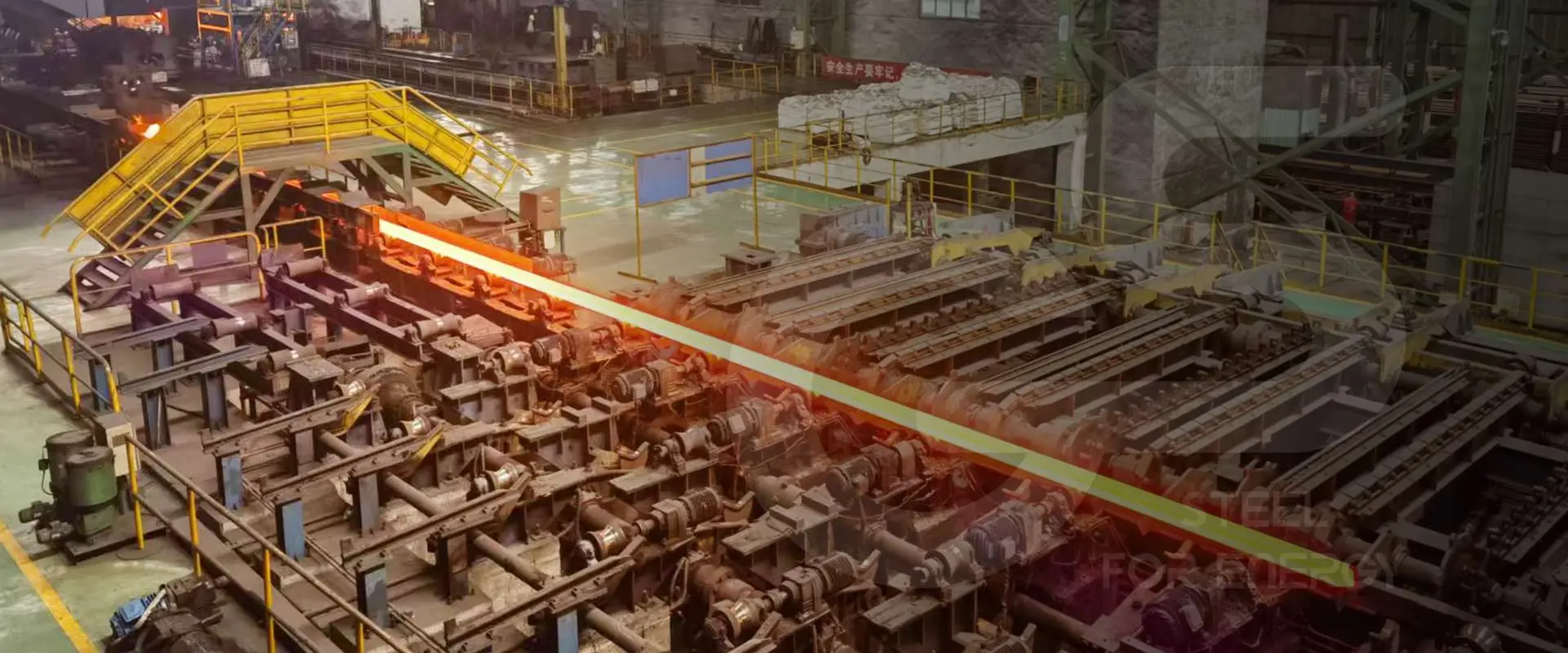
Every casing purchase order starts with three numbers: outside diameter, nominal weight, and grade. Get any one of these wrong and you face the wrong drift clearance for your completion tools, a failed pressure test, or material that does not meet your well design. We supply casing across West Africa, the Middle East, and South America, and the same three errors appear on POs from all three markets — wrong OD-weight combination, nominal ID used instead of drift diameter, and nominal wall used in collapse calculations. This reference covers the complete API 5CT 11th edition (December 2023) standard casing and tubing dimensions. All dimensions, weights, and drift values are taken directly from API 5CT 11th edition Tables C.18 and C.19. ZC Steel Pipe manufactures the full size range from 4½" to 20" casing and 1.050" to 4½" tubing in API 5CT grades J55, K55, N80, L80 (Type 1, 3Cr, 9Cr, 13Cr), R95, C90, T95, P110, C110, and Q125.
Quick Reference
API 5CT casing runs 4½″ to 20″ OD; tubing runs 1.050″ to 4½″ OD. The full 99-size dimension table is below — or use the Casing & Tubing Size Lookup tool → to pull one size instantly. Two rules govern how the numbers are used, and both are on this page because getting them wrong is the most common casing error we see:
- Design to minimum wall, not nominal. API 5CT permits −12.5% on wall, so use
nominal × 0.875in every collapse and burst calculation (e.g. 9⅝″ 47 lb/ft: design wall = 0.472 × 0.875 = 0.413″, not 0.472″). - Size completion tools to drift, not ID. Drift is the only guaranteed bore (e.g. 9⅝″ 47 lb/ft drift = 8.525″, vs 8.681″ nominal ID) — a tool sized to ID may not pass.
The complete dimension tables, string-by-string size selection, and the coupling/connection detail follow.
What we see on wall thickness: We regularly receive collapse design calculations from engineers that use nominal wall throughout. When actual material arrives with wall at minus 12.0% — which is fully API-compliant — the collapse rating is suddenly marginal. For 9-5/8" 47 lb/ft, nominal wall is 0.472". The API-compliant minimum is 0.472 × 0.875 = 0.413" — a 59-thou difference. Running the collapse formula against 0.413" instead of 0.472" drops the collapse rating by 8–10% on a typical intermediate string. On tight clearance wells or wells with abnormal pore pressure, that margin is not recoverable without respecifying the string. The fix is simple: always use minimum wall (nominal × 0.875) as the design wall, never nominal. We flag this every time we see collapse calculations on a quote, but it is worth stating explicitly here.
Which String Uses Which Size
A modern oil well uses multiple concentric casing strings, each set at a different depth to serve a different purpose. Casing selection always works from the bottom up — choose your production casing size first, then work upward so each outer string can accommodate the drift diameter needed to run the next string through it.
| String Type | Typical OD | Depth | Purpose | Common Grades |
|---|---|---|---|---|
| Conductor | 20", 18⅝", 16" | 30–300 ft | Isolate surface formations, support wellhead | K55, J55 |
| Surface | 13⅜", 16", 10¾" | 300–3,000 ft | Protect freshwater aquifers, support BOP | J55, K55, N80 |
| Intermediate | 9⅝", 7⅝", 7" | 3,000–10,000+ ft | Isolate problem zones, reach target depth | N80, L80, P110 |
| Production | 7", 5½", 5", 4½" | Full depth to TD | Contain reservoir pressure, house completion | N80, L80, L80-3Cr, R95, C90, T95, P110, C110 |
A typical land well in West Africa or South America runs 4½ inch production inside 7 inch intermediate inside 9⅝ inch surface inside 13⅜ inch conductor. Each step must clear the drift of the outer string with enough margin for centralisers and running tools. For how size, grade and connection come together across a full string, see the casing pipe complete guide →; for the coupling dimensions that sit on these sizes, see the API 5CT couplings guide →.
Wall Thickness Tolerance and Minimum Design Wall
API 5CT specifies a minus 12.5 percent tolerance on wall thickness. Every casing joint that passes mill inspection may have an actual wall thickness as low as 87.5% of the nominal value. This is not a defect — it is the permitted range.
Drift diameter is not nominal ID. For 9-5/8" 47 lb/ft, the nominal ID calculated from OD minus 2 × wall is approximately 8.681" (220.50 mm). The API 5CT drift diameter for this size and weight is 8.525" (216.54 mm) — a reduction of 156 thou. A perforating gun specified at "8.7 inch maximum OD" will not pass through this casing. The drift diameter is the only contractually guaranteed bore dimension. Nominal ID is a calculated value that does not account for coupling bore, coupling standoff, or the full stack of manufacturing tolerances. Always size completion tools to drift diameter, not to nominal ID. This is one of the most common completion failures we see on African projects where the drilling engineer and the completions engineer work from different documents.
Worked dimensional example — 9-5/8" 47 lb/ft:
- OD: 9.625" (244.48 mm)
- Nominal wall: 0.472" (11.99 mm)
- Minimum wall (API tolerance): 0.472 × 0.875 = 0.413" (10.49 mm)
- Nominal ID: 9.625 − (2 × 0.472) = 8.681" (220.50 mm)
- API 5CT drift diameter: 8.525" (216.54 mm)
Collapse and burst design uses 0.413" wall, not 0.472". Completion tool clearance check uses 8.525" drift, not 8.681" nominal ID.
How to Read a Casing Dimension Table
Five dimensions appear in every API 5CT casing table. Each has a specific procurement use:
OD (Outside Diameter) — the nominal outside diameter in inches. This is what you order by and what determines borehole clearance and BOP compatibility.
Nominal Weight (lb/ft) — the theoretical weight per linear foot used for hookload calculations. Multiple weights exist for each OD, each corresponding to a specific wall thickness.
Wall Thickness — derived from OD and nominal weight. API 5CT allows minus 12.5 percent tolerance on delivered wall thickness. Use minimum wall for design calculations.
ID (Inside Diameter) — calculated as OD minus 2 times wall thickness. This is the nominal bore before tolerances are applied. Do not use ID to size completion tools.
Drift Diameter — the minimum guaranteed bore through the joint including through the coupling. Always use drift diameter for sizing perforating guns, packers, and tubing. This is the contractual guarantee — nominal ID is not.
For the complete grade ladder with tensile, hardness, and chemistry limits, see the API 5CT specification tables →.
To look up the OD, wall, ID and drift for any size and weight instantly, use the Casing & Tubing Size Lookup →; to match a grade to your well conditions, use the Pipe Grade Selector →.
API 5CT Casing Dimensions — API 5CT 11th Edition
All 99 standard casing sizes from API 5CT 11th edition (December 2023) Table C.18. Nominal weight includes threads and couplings. Plain-end weight is the pipe body only (no threads or couplings).
| OD (in) | OD (mm) | Nominal Weight (lb/ft) | Nominal Weight (kg/m)* | Wall (mm) | ID (mm) | Drift (mm) | Plain-end Weight (kg/m) |
|---|---|---|---|---|---|---|---|
| 4½ | 114.3 | 9.5 | 14.38 | 5.21 | 103.88 | 100.70 | 14.02 |
| 4½ | 114.3 | 10.5 | 15.73 | 5.69 | 102.92 | 99.74 | 15.24 |
| 4½ | 114.3 | 11.6 | 17.38 | 6.35 | 101.60 | 98.42 | 16.91 |
| 4½ | 114.3 | 13.5 | 19.87 | 7.37 | 99.56 | 96.38 | 19.44 |
| 4½ | 114.3 | 15.1 | 22.69 | 8.56 | 97.18 | 94.00 | 22.32 |
| 5 | 127.0 | 11.5 | 17.19 | 5.59 | 115.82 | 112.64 | 16.74 |
| 5 | 127.0 | 13.0 | 19.69 | 6.43 | 114.14 | 110.96 | 19.12 |
| 5 | 127.0 | 15.0 | 22.69 | 7.52 | 111.96 | 108.78 | 22.16 |
| 5 | 127.0 | 18.0 | 27.19 | 9.19 | 108.62 | 105.44 | 26.70 |
| 5 | 127.0 | 21.4 | 32.13 | 11.10 | 104.80 | 101.62 | 31.73 |
| 5 | 127.0 | 23.2 | 34.76 | 12.14 | 102.72 | 99.54 | 34.39 |
| 5 | 127.0 | 24.1 | 36.15 | 12.70 | 101.60 | 98.42 | 35.82 |
| 5½ | 139.7 | 14.0 | 20.91 | 6.20 | 127.30 | 124.12 | 20.41 |
| 5½ | 139.7 | 15.5 | 23.48 | 6.98 | 125.74 | 122.56 | 22.85 |
| 5½ | 139.7 | 17.0 | 25.72 | 7.72 | 124.26 | 121.08 | 25.13 |
| 5½ | 139.7 | 20.0 | 30.05 | 9.17 | 121.36 | 118.18 | 29.52 |
| 5½ | 139.7 | 23.0 | 34.05 | 10.54 | 118.62 | 115.44 | 33.57 |
| 5½ | 139.7 | 26.8 | 40.15 | 12.70 | 114.30 | 111.12 | 39.78 |
| 5½ | 139.7 | 29.7 | 44.47 | 14.27 | 111.16 | 107.98 | 44.14 |
| 5½ | 139.7 | 32.6 | 48.74 | 15.88 | 107.94 | 104.76 | 48.49 |
| 5½ | 139.7 | 35.3 | 52.80 | 17.45 | 104.80 | 101.62 | 52.61 |
| 5½ | 139.7 | 38.0 | 56.82 | 19.05 | 101.60 | 98.42 | 56.68 |
| 5½ | 139.7 | 40.5 | 60.64 | 20.62 | 98.46 | 95.28 | 60.55 |
| 5½ | 139.7 | 43.1 | 64.41 | 22.22 | 95.26 | 92.08 | 64.38 |
| 6⅝ | 168.28 | 20.0 | 29.76 | 7.32 | 153.64 | 150.46 | 29.06 |
| 6⅝ | 168.28 | 24.0 | 35.72 | 8.94 | 150.40 | 147.22 | 35.13 |
| 6⅝ | 168.28 | 28.0 | 41.67 | 10.59 | 147.10 | 143.92 | 41.18 |
| 6⅝ | 168.28 | 32.0 | 47.62 | 12.06 | 144.16 | 140.98 | 46.46 |
| 7 | 177.8 | 17.0 | 25.60 | 5.87 | 166.06 | 162.88 | 24.89 |
| 7 | 177.8 | 20.0 | 29.91 | 6.91 | 163.98 | 160.80 | 29.12 |
| 7 | 177.8 | 23.0 | 34.67 | 8.05 | 161.70 | 158.52 | 33.70 |
| 7 | 177.8 | 26.0 | 39.14 | 9.19 | 159.42 | 156.24 | 38.21 |
| 7 | 177.8 | 29.0 | 43.60 | 10.36 | 157.08 | 153.90 | 42.78 |
| 7 | 177.8 | 32.0 | 47.92 | 11.51 | 154.78 | 151.60 | 47.20 |
| 7 | 177.8 | 35.0 | 52.09 | 12.65 | 152.50 | 149.32 | 51.52 |
| 7 | 177.8 | 38.0 | 56.10 | 13.72 | 150.36 | 147.18 | 55.52 |
| 7 | 177.8 | 42.7 | 63.84 | 15.88 | 146.04 | 142.86 | 63.41 |
| 7 | 177.8 | 46.4 | 69.35 | 17.45 | 142.90 | 139.72 | 69.01 |
| 7 | 177.8 | 50.1 | 74.85 | 19.05 | 139.70 | 136.52 | 74.58 |
| 7 | 177.8 | 53.6 | 80.21 | 20.62 | 136.56 | 133.38 | 79.93 |
| 7 | 177.8 | 57.1 | 85.42 | 22.22 | 133.36 | 130.18 | 85.25 |
| 7⅝ | 193.68 | 24.0 | 35.72 | 7.62 | 178.44 | 175.26 | 34.96 |
| 7⅝ | 193.68 | 26.4 | 39.29 | 8.33 | 177.02 | 173.84 | 38.08 |
| 7⅝ | 193.68 | 29.7 | 44.20 | 9.52 | 174.64 | 171.46 | 43.24 |
| 7⅝ | 193.68 | 33.7 | 50.15 | 10.92 | 171.84 | 168.66 | 49.22 |
| 7⅝ | 193.68 | 39.0 | 58.04 | 12.70 | 168.28 | 165.10 | 56.68 |
| 7⅝ | 193.68 | 42.8 | 63.69 | 14.27 | 165.14 | 161.96 | 63.14 |
| 7⅝ | 193.68 | 45.3 | 67.41 | 15.11 | 163.46 | 160.28 | 66.54 |
| 7⅝ | 193.68 | 47.1 | 70.09 | 15.88 | 161.92 | 158.74 | 69.63 |
| 7⅝ | 193.68 | 51.2 | 76.19 | 17.45 | 158.78 | 155.60 | 75.84 |
| 7⅝ | 193.68 | 55.3 | 82.30 | 19.05 | 155.58 | 152.40 | 82.04 |
| 7¾ | 196.85 | 46.1 | 68.60 | 15.11 | 166.63 | 163.45 | 67.72 |
| 8⅝ | 219.08 | 24.0 | 35.72 | 6.71 | 205.66 | 202.48 | 35.14 |
| 8⅝ | 219.08 | 28.0 | 41.67 | 7.72 | 203.64 | 200.46 | 40.24 |
| 8⅝ | 219.08 | 32.0 | 47.62 | 8.94 | 201.20 | 198.02 | 46.33 |
| 8⅝ | 219.08 | 36.0 | 53.57 | 10.16 | 198.76 | 195.58 | 52.35 |
| 8⅝ | 219.08 | 40.0 | 59.53 | 11.43 | 196.22 | 193.04 | 58.53 |
| 8⅝ | 219.08 | 44.0 | 65.48 | 12.70 | 193.68 | 190.50 | 64.64 |
| 8⅝ | 219.08 | 49.0 | 72.92 | 14.15 | 190.78 | 187.60 | 71.51 |
| 9⅝ | 244.48 | 32.3 | 48.07 | 7.92 | 228.60 | 224.66 | 46.20 |
| 9⅝ | 244.48 | 36.0 | 53.57 | 8.94 | 226.60 | 222.63 | 51.93 |
| 9⅝ | 244.48 | 40.0 | 59.53 | 10.03 | 224.40 | 220.45 | 57.99 |
| 9⅝ | 244.48 | 43.5 | 64.74 | 11.05 | 222.40 | 218.41 | 63.61 |
| 9⅝ | 244.48 | 47.0 | 69.94 | 11.99 | 220.50 | 216.54 | 68.75 |
| 9⅝ | 244.48 | 53.5 | 79.62 | 13.84 | 216.80 | 212.83 | 78.72 |
| 9⅝ | 244.48 | 58.4 | 86.91 | 15.11 | 214.25 | 210.29 | 85.47 |
| 9⅝ | 244.48 | 59.4 | 88.40 | 15.47 | 213.50 | 209.58 | 87.37 |
| 9⅝ | 244.48 | 64.9 | 96.58 | 17.07 | 210.30 | 206.38 | 95.73 |
| 9⅝ | 244.48 | 70.3 | 104.62 | 18.64 | 207.20 | 203.23 | 103.82 |
| 9⅝ | 244.48 | 75.6 | 112.51 | 20.24 | 204.00 | 200.02 | 111.93 |
| 10¾ | 273.05 | 32.75 | 48.74 | 7.09 | 258.90 | 254.91 | 46.50 |
| 10¾ | 273.05 | 40.5 | 60.27 | 8.89 | 255.30 | 251.31 | 57.91 |
| 10¾ | 273.05 | 45.5 | 67.71 | 10.16 | 252.70 | 248.77 | 65.87 |
| 10¾ | 273.05 | 51.0 | 75.90 | 11.43 | 250.20 | 246.23 | 73.75 |
| 10¾ | 273.05 | 55.5 | 82.59 | 12.57 | 247.90 | 243.94 | 80.75 |
| 10¾ | 273.05 | 60.7 | 90.33 | 13.84 | 245.40 | 241.40 | 88.47 |
| 10¾ | 273.05 | 65.7 | 97.77 | 15.11 | 242.80 | 238.86 | 96.12 |
| 10¾ | 273.05 | 73.2 | 108.93 | 17.07 | 238.90 | 234.95 | 107.76 |
| 10¾ | 273.05 | 79.2 | 117.86 | 18.64 | 235.80 | 231.80 | 116.95 |
| 10¾ | 273.05 | 85.3 | 126.94 | 20.24 | 232.60 | 228.60 | 126.19 |
| 11¾ | 298.45 | 42.0 | 62.50 | 8.46 | 281.50 | 277.50 | 62.56 |
| 11¾ | 298.45 | 47.0 | 69.94 | 9.52 | 279.41 | 275.44 | 67.83 |
| 11¾ | 298.45 | 54.0 | 80.36 | 11.05 | 276.40 | 272.39 | 78.32 |
| 11¾ | 298.45 | 60.0 | 89.29 | 12.42 | 273.60 | 269.65 | 87.61 |
| 11¾ | 298.45 | 65.0 | 96.73 | 13.56 | 271.30 | 267.36 | 95.27 |
| 11¾ | 298.45 | 71.0 | 105.66 | 14.78 | 268.90 | 264.92 | 103.40 |
| 13⅜ | 339.72 | 48.0 | 71.43 | 8.38 | 322.96 | 318.99 | 68.48 |
| 13⅜ | 339.72 | 54.5 | 81.10 | 9.65 | 320.42 | 316.45 | 78.55 |
| 13⅜ | 339.72 | 61.0 | 90.78 | 10.92 | 317.88 | 313.91 | 88.55 |
| 13⅜ | 339.72 | 68.0 | 101.19 | 12.19 | 315.34 | 311.37 | 98.46 |
| 13⅜ | 339.72 | 72.0 | 107.15 | 13.06 | 313.60 | 309.63 | 105.21 |
| 16 | 406.4 | 65.0 | 96.73 | 9.53 | 387.40 | 382.57 | 96.73 |
| 16 | 406.4 | 75.0 | 111.61 | 11.13 | 384.10 | 379.37 | 108.49 |
| 16 | 406.4 | 84.0 | 125.01 | 12.57 | 381.30 | 376.48 | 122.09 |
| 16 | 406.4 | 109.0 | 162.21 | 16.66 | 373.10 | 368.30 | 160.13 |
| 18⅝ | 473.08 | 87.5 | 130.21 | 11.05 | 450.98 | 446.22 | 125.91 |
| 20 | 508.0 | 94.0 | 139.89 | 11.13 | 485.70 | 480.97 | 136.38 |
| 20 | 508.0 | 106.5 | 158.49 | 12.70 | 482.60 | 477.82 | 155.13 |
| 20 | 508.0 | 133.0 | 197.93 | 16.13 | 475.70 | 470.97 | 195.66 |
*Nominal weight includes threads and couplings per API 5CT 11th edition Table C.18 Column 4. For martensitic chromium grades (L80 9Cr, L80 13Cr), multiply nominal weight by correction factor 0.989.
API 5CT Tubing Dimensions — API 5CT 11th Edition
All 45 standard tubing sizes from API 5CT 11th edition Table C.19. Three connection variants are shown: NU (Non-upset, threaded and coupled), EU (External upset, threaded and coupled), and IJ (Integral joint). Em-dash (—) indicates that variant is not available for that size/weight combination.
| OD (in) | OD (mm) | Wt NU (lb/ft) | Wt EU (lb/ft) | Wt IJ (lb/ft) | Wt NU (kg/m) | Wt EU (kg/m) | Wt IJ (kg/m) | Wall (mm) | ID (mm) | Wpe (kg/m) |
|---|---|---|---|---|---|---|---|---|---|---|
| 1.050 | 26.67 | 1.14 | 1.20 | — | 1.70 | 1.79 | — | 2.87 | 20.93 | 1.68 |
| 1.050 | 26.67 | 1.48 | 1.54 | — | 2.20 | 2.29 | — | 3.91 | 18.85 | 2.19 |
| 1.315 | 33.40 | 1.70 | 1.80 | 1.72 | 2.53 | 2.68 | 2.56 | 3.38 | 26.64 | 2.50 |
| 1.315 | 33.40 | 2.19 | 2.24 | — | 3.26 | 3.33 | — | 4.55 | 24.30 | 3.24 |
| 1.660 | 42.16 | 2.09 | — | 2.10 | — | — | 3.13 | 3.18 | 35.80 | 3.06 |
| 1.660 | 42.16 | 2.30 | 2.40 | 2.33 | 3.42 | 3.57 | 3.47 | 3.56 | 35.04 | 3.39 |
| 1.660 | 42.16 | 3.03 | 3.07 | — | 4.51 | 4.57 | — | 4.85 | 32.46 | 4.46 |
| 1.900 | 48.26 | 2.40 | — | 2.40 | — | — | 3.57 | 3.18 | 41.90 | 3.54 |
| 1.900 | 48.26 | 2.75 | 2.90 | 2.76 | 4.09 | 4.32 | 4.11 | 3.68 | 40.90 | 4.05 |
| 1.900 | 48.26 | 3.65 | 3.73 | — | 5.43 | 5.55 | — | 5.08 | 38.10 | 5.41 |
| 1.900 | 48.26 | 4.42 | — | — | 6.58 | — | — | 6.35 | 35.56 | 6.56 |
| 1.900 | 48.26 | 5.15 | — | — | 7.66 | — | — | 7.62 | 33.02 | 7.64 |
| 2.063 | 52.40 | 3.24 | — | 3.25 | — | — | 4.84 | 3.96 | 44.48 | 4.73 |
| 2.063 | 52.40 | 4.50 | — | — | — | — | — | 5.72 | 40.96 | 6.58 |
| 2⅜ | 60.32 | 4.00 | — | — | 5.95 | — | — | 4.24 | 51.84 | 5.86 |
| 2⅜ | 60.32 | 4.60 | 4.70 | — | 6.85 | 6.99 | — | 4.83 | 50.66 | 6.61 |
| 2⅜ | 60.32 | 5.80 | 5.95 | — | 8.63 | 8.85 | — | 6.45 | 47.42 | 8.57 |
| 2⅜ | 60.32 | 6.60 | — | — | 9.82 | — | — | 7.49 | 45.34 | 9.76 |
| 2⅜ | 60.32 | 7.35 | 7.45 | — | 10.94 | 11.09 | — | 8.53 | 43.26 | 10.89 |
| 2⅞ | 73.02 | 6.40 | 6.50 | — | 9.52 | 9.67 | — | 5.51 | 62.00 | 9.17 |
| 2⅞ | 73.02 | 7.80 | 7.90 | — | 11.61 | 11.76 | — | 7.01 | 59.00 | 11.41 |
| 2⅞ | 73.02 | 8.60 | 8.70 | — | 12.80 | 12.95 | — | 7.82 | 57.78 | 12.57 |
| 2⅞ | 73.02 | 9.35 | 9.45 | — | 13.91 | 14.06 | — | 8.64 | 54.74 | 13.72 |
| 2⅞ | 73.02 | 10.50 | — | — | 15.63 | — | — | 9.96 | 53.10 | 15.49 |
| 2⅞ | 73.02 | 11.50 | — | — | 17.11 | — | — | 11.18 | 50.66 | 17.05 |
| 3½ | 88.90 | 7.70 | — | — | 11.46 | — | — | 5.49 | 77.92 | 11.29 |
| 3½ | 88.90 | 9.20 | 9.30 | — | 13.69 | 13.84 | — | 6.45 | 76.00 | 13.12 |
| 3½ | 88.90 | 10.20 | — | — | 15.18 | — | — | 7.34 | 74.22 | 14.76 |
| 3½ | 88.90 | 12.70 | 12.95 | — | 18.90 | 19.27 | — | 9.52 | 69.86 | 18.64 |
| 3½ | 88.90 | 14.30 | — | — | 21.28 | — | — | 10.92 | 67.06 | 21.00 |
| 3½ | 88.90 | 15.50 | — | — | 23.07 | — | — | 12.09 | 64.72 | 23.07 |
| 3½ | 88.90 | 17.00 | — | — | 25.30 | — | — | 13.46 | 61.98 | 25.04 |
| 4 | 101.60 | 9.50 | — | — | 14.14 | — | — | 5.74 | 90.12 | 13.57 |
| 4 | 101.60 | 10.70 | 11.00 | — | — | 16.37 | — | 6.65 | 88.30 | 15.57 |
| 4 | 101.60 | 13.20 | — | — | 19.64 | — | — | 8.38 | 84.84 | 19.27 |
| 4 | 101.60 | 16.10 | — | — | 23.96 | — | — | 10.54 | 80.52 | 23.67 |
| 4 | 101.60 | 18.90 | — | — | 28.13 | — | — | 12.70 | 76.20 | 27.84 |
| 4 | 101.60 | 22.20 | — | — | 33.04 | — | — | 15.49 | 70.62 | 32.89 |
| 4½ | 114.30 | 12.60 | 12.75 | — | 18.75 | 18.97 | — | 6.88 | 100.54 | 18.23 |
| 4½ | 114.30 | 15.20 | — | — | 22.62 | — | — | 8.56 | 97.18 | 22.32 |
| 4½ | 114.30 | 17.00 | — | — | 25.30 | — | — | 9.65 | 95.00 | 24.90 |
| 4½ | 114.30 | 18.90 | — | — | 28.13 | — | — | 10.92 | 92.46 | 27.84 |
| 4½ | 114.30 | 21.50 | — | — | 32.00 | — | — | 12.70 | 88.90 | 31.82 |
| 4½ | 114.30 | 23.70 | — | — | 35.27 | — | — | 14.22 | 85.86 | 35.10 |
| 4½ | 114.30 | 26.10 | — | — | 38.84 | — | — | 16.00 | 82.30 | 38.79 |
*NU = Non-upset; EU = External upset; IJ = Integral joint. Nominal weights from API 5CT 11th edition Table C.19. Tubing does not have published drift values (drift requirements specified on order).
When NOT to Use Nominal Dimensions
Nominal OD, nominal wall, and nominal ID are the published reference values. In three specific scenarios, using nominal values rather than minimum or drift values creates design risk that leads to field failures.
Collapse design. Collapse resistance is a function of wall thickness — and because the API tolerance is minus 12.5 percent, the minimum wall you can receive and still have conforming pipe is nominal × 0.875. Any collapse design that uses nominal wall is unconservative by up to 8–10% on the calculated collapse rating. On a 9-5/8" intermediate string at 10,000 ft with abnormal pore pressure, that shortfall can be the difference between a safe well and a casing collapse event.
Completion tool sizing. Perforating guns, bridge plugs, packers, and setting tools are sized to pass through the casing bore. The minimum guaranteed bore is the drift diameter, not the nominal ID. A gun or packer specified to pass nominal ID will pass the calculation but may not pass the joint in the field. We have seen project completions delayed because a perforating gun sized to nominal ID would not pass a coupling — a failure that only appeared at rig-up, 6,000 feet into the run. Drift diameter is the correct clearance datum. For critical completion tools, add a further 1/8" service margin beyond the tabulated drift.
Torque-and-drag on deviated wells. Torque-and-drag models use casing ID to calculate contact forces and side loads between the drillstring or completion string and the casing wall. Using nominal ID rather than minimum ID (which reflects minimum wall at maximum OD tolerance) understates the contact geometry and produces optimistic T&D predictions. On wells with dogleg severities above 3 degrees per 100 feet, the discrepancy becomes visible in the overpull margins.
Procurement Trap — OD Without Nominal Weight
Specifying only an OD on a purchase order is one of the most common errors we see from procurement teams working off conceptual well programs. Consider 9-5/8" casing: the standard comes in weights from 32.3 lb/ft through 75.6 lb/ft. Each weight has a different wall thickness, a different drift diameter, and a different pressure rating. A PO that says "supply 9-5/8 inch casing" leaves the mill free to ship whatever weight they have in stock — which may be 40.0 lb/ft when the design requires 47.0 lb/ft, or 53.5 lb/ft when the drift clearance was sized for 47.0 lb/ft.
The correct line item is: 9-5/8" × 47.00 lb/ft × N80-1 × LTC × R3 × PSL-2. OD plus nominal weight plus grade sub-type plus thread type plus range plus PSL — all six items, on every line. A PO missing any one of these creates a supply event that costs more to unwind than the casing itself.
Grade Selection — What the Numbers Mean for Procurement
Selecting a grade is a mechanical and environmental decision, not just a price decision. The table below covers the grades ZC supplies and where each is used. For sour service projects — common in West Africa and parts of South America — grade selection must comply with NACE MR0175 / ISO 15156.
| Grade | Min Yield (psi) | Min Tensile (psi) | Hardness Max | Typical Application | H2S Sour Service |
|---|---|---|---|---|---|
| J55 | 55,000 | 75,000 | — | Surface casing, conductor | Not recommended |
| K55 | 55,000 | 95,000 | — | Surface / conductor | Not recommended |
| N80 (Type 1 or Q) | 80,000 | 100,000 | — | Intermediate / production | Not recommended |
| L80 (Type 1) | 80,000 | 95,000 | HRC 23 | Sour service production | Yes — ISO 15156 |
| L80-3Cr | 80,000 | 95,000 | HRC 23 | Mild CO₂ environments — sweet wells | No (CO₂ grade only) |
| L80-9Cr | 80,000 | 95,000 | HRC 23 | Moderate CO₂ / chloride environments | No (CO₂ grade only) |
| R95 | 95,000 | 105,000 | — | Medium-depth sweet service | Not for sour service |
| C90 | 90,000 | 100,000 | HRC 25.4 | Higher-strength sour service | Yes — ISO 15156 |
| T95 | 95,000 | 105,000 | HRC 25.4 | Sour service, higher strength | Yes — ISO 15156 |
| P110 | 110,000 | 125,000 | — | Deep HPHT wells | Not for sour service |
| C110 | 110,000 | 115,000 | HRC 30 | Sour service at P110 strength | Yes — ISO 15156 |
| Q125 | 125,000 | 135,000 | HRC 34 | Ultra-deep HPHT | Not for sour service |
N80 is the most common production casing grade on non-sour wells in Africa and South America. Always specify N80-1 or N80Q on the purchase order — not just N80. They are manufactured differently and mixing sub-types in a string creates traceability problems on projects with strict documentation requirements.
For a deeper look at grade mechanics and sour service qualification, see casing design basics — collapse, burst, and tension.
Connection Types
API 5CT defines three standard thread and coupling types. Connection choice affects coupling OD, which determines borehole clearance and BOP ram compatibility.
| Connection | Full Name | Seal | Typical Use |
|---|---|---|---|
| STC | Short Thread Coupling | Thread compound | Surface and conductor casing |
| LTC | Long Thread Coupling | Thread compound | Intermediate and production |
| BTC | Buttress Thread Coupling | Thread compound | Higher pressure, deep wells |
| Premium | Varies by supplier | Metal-to-metal | Gas wells, HPHT, sour service |
For gas wells, HPHT applications, and any service requiring a gas-tight seal, premium connections replace API threads. ZC Steel Pipe holds independent patents on premium connections qualified to API 5C5 CAL IV for all standard casing sizes.
Length Ranges — R1, R2 and R3
API 5CT defines three standard length ranges. Most international EPC projects specify Range 3 to minimise the number of connections in the string and reduce make-up time on the rig floor.
| Range | Length (ft) | Length (m) | Notes |
|---|---|---|---|
| R1 | 16–25 | 4.88–7.62 | Pup joints, short strings |
| R2 | 25–34 | 7.62–10.36 | Some surface casing applications |
| R3 | 34–48 | 10.36–14.63 | Standard for most strings |
Always specify the range on your purchase order. If not stated, mills may supply R2 by default on some sizes.
PSL-1 vs PSL-2
API 5CT defines two Product Specification Levels. Most international oil and gas projects in Africa and the Middle East require PSL-2 as a minimum.
| Requirement | PSL-1 | PSL-2 |
|---|---|---|
| Charpy impact testing | Not mandatory | Mandatory |
| Hardness testing | Selected grades only | All grades |
| Non-destructive testing | Selected grades only | All grades |
| Hydrostatic test | Mandatory | Mandatory |
| MTC documentation | EN 10204 3.1 | EN 10204 3.1 or 3.2 |
PSL-1 material cannot be retroactively upgraded to PSL-2 after delivery. Confirm the PSL requirement in your project specification before placing the order.
Casing vs Tubing
Casing and tubing are both governed by API 5CT but serve different functions in the well.
| Parameter | Casing | Tubing |
|---|---|---|
| Purpose | Stabilise wellbore, isolate formations | Convey produced fluids to surface |
| Typical OD | 4½ inch to 20 inch | 1.050 inch to 4½ inch |
| Cemented | Yes — cemented to borehole wall | No — run inside casing, retrievable |
| Wall thickness | Heavier — collapse and burst design | Lighter — internal pressure and tensile |
| Common grades | N80, L80, R95, C90, T95, P110, C110, Q125 | N80, L80, L80-3Cr, T95, P110, C110 |
Specification Checklist — How to Write a Complete Casing Purchase Order
An incomplete purchase order is the most common cause of incorrect casing delivery and project delays. Every casing order to ZC Steel Pipe should include:
- Standard — API 5CT or ISO 11960
- Grade — with sub-type (N80-1 or N80Q, L80 Type 1 or L80-13Cr)
- OD and nominal weight — e.g. 9⅝ inch x 47.00 lb/ft
- Thread type — STC, LTC, BTC, or premium connection designation
- Range — R1, R2, or R3 (default R3 for most strings)
- PSL level — PSL-1 or PSL-2
- Quantity — in joints or metric tonnes with average joint length
- Delivery port — for freight planning and lead time
- Inspection scope — third-party witness, mill visit, supplementary requirements
- MTC level — EN 10204 3.1 or 3.2
Frequently Asked Questions
What are the standard API 5CT casing sizes?
API 5CT casing is available in standard OD sizes from 4½ inch through 20 inch. The most commonly used sizes in well construction are 4½ inch and 5 inch for production casing, 5½ inch, 7 inch and 7⅝ inch for intermediate and production strings, 9⅝ inch and 10¾ inch for intermediate casing, and 13⅜ inch and 20 inch for surface and conductor casing.
What is drift diameter and why does it matter?
Drift diameter is the minimum guaranteed internal bore through a casing joint including through the coupling. It is always smaller than nominal ID because manufacturing tolerances on OD and wall thickness both reduce the actual bore. Engineers must use drift diameter when sizing completion tools such as perforating guns, packers, and tubing strings. Ordering casing without confirming drift clearance for your completion equipment is one of the most common and costly mistakes in well planning.
What is the wall thickness tolerance for API 5CT casing?
API 5CT specifies a wall thickness tolerance of minus 12.5 percent on the nominal value. This means delivered wall thickness can be up to 12.5 percent below nominal. For collapse and burst design calculations, always use minimum wall — nominal minus 12.5 percent — as the design basis, not the nominal thickness. Using nominal wall in design calculations on tight clearance wells is a known failure mode.
Which API 5CT grades are approved for sour service?
Under NACE MR0175 / ISO 15156, only L80, T95, and C110 are approved for H2S sour service within their hardness limits. N80 and P110 are not acceptable for sour service applications. Q125 has conditional sour service acceptance depending on H2S partial pressure and temperature. J55 and K55 are not recommended for sour service. Always verify grade selection against the specific H2S partial pressure and pH conditions in your well.
What is the difference between R1, R2 and R3 casing?
API 5CT defines three standard length ranges for casing. R1 is 16 to 25 feet, typically used for pup joints and short strings. R2 is 25 to 34 feet, used for some surface casing applications. R3 is 34 to 48 feet and is the standard for most casing strings on international projects. Always specify the range on your purchase order — mills may default to R2 if R3 is not explicitly stated.
How do I specify API 5CT casing on a purchase order?
A complete API 5CT casing purchase order must include: OD in inches, nominal weight in lb/ft, grade with sub-type (N80-1 or N80Q, not just N80), thread type (STC, LTC, BTC or premium connection name), range (R1, R2 or R3), PSL level (PSL-1 or PSL-2), quantity in joints or metric tonnes, delivery port, inspection requirements, and MTC certification level (EN 10204 3.1 or 3.2). Missing any of these fields causes supply delays or incorrect material deliveries.