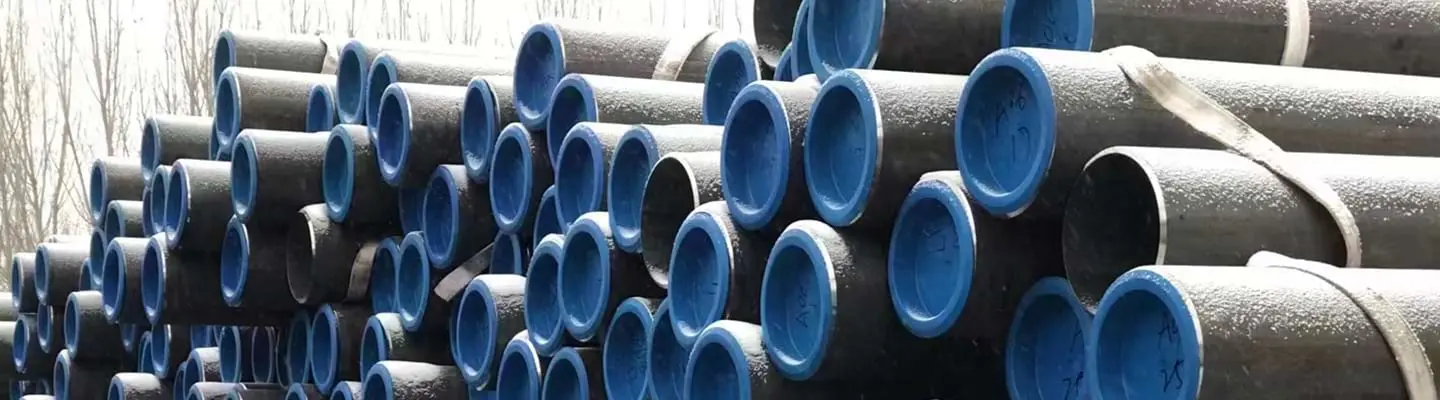
Steel pipe piling is one of the most widely used deep foundation systems in civil and offshore construction. Driven pipe piles transfer structural loads through weak near-surface soils to stronger bearing strata at depth, providing high axial and lateral load capacity with relatively simple installation using standard pile driving equipment. ASTM A252 is the governing specification for steel pipe piles in North American and international practice, covering the material requirements, dimensional tolerances, and testing requirements for welded and seamless steel pipe piling.
ZC Steel Pipe supplies ASTM A252 steel pipe piling in Grade 2 and Grade 3, in welded (ERW, LSAW, SSAW) configurations across a wide OD range. We supply piling pipe to infrastructure, port, offshore, and foundation engineering projects globally. This guide covers ASTM A252 specifications, grade selection, dimensional data, and procurement considerations.
On a West Africa port expansion project, the structural engineer specified ASTM A252 Grade 2 for 16-inch driven piles through soft marine clay to a dense sand layer at 24 m depth. Grade 2 (min yield 241 MPa) was adequate for the structural loads — but pile driving through the dense sand layer generated dynamic compressive stresses that exceeded Grade 2's yield strength at the pile toe. Three piles buckled during driving before reaching bearing stratum. Replacement piles were specified as Grade 3 (min yield 310 MPa) with a heavier wall (+3 mm). No further buckling occurred. The structural capacity calculation had been done correctly for service loads. The driving stress calculation — a separate check — had not been done at all.
1. ASTM A252 Grade Specifications
ASTM A252 defines three grades of steel pipe piling:
| Property | Grade 1 | Grade 2 | Grade 3 |
|---|---|---|---|
| Min yield strength | 170 MPa (25 ksi) | 241 MPa (35 ksi) | 310 MPa (45 ksi) |
| Min tensile strength | 310 MPa (45 ksi) | 414 MPa (60 ksi) | 455 MPa (66 ksi) |
| Min elongation (8″ gauge) | — | — | — |
| Wall thickness tolerance | ±12.5% | ±12.5% | ±12.5% |
| OD tolerance | Per ASTM A252 Table 1 | Per ASTM A252 Table 1 | Per ASTM A252 Table 1 |
| Common application | Light loads, temporary | Standard foundation | Heavy loads, offshore |
Grade 3 is the most commonly specified grade for permanent foundation piling due to its higher yield strength, which allows smaller wall thickness or smaller OD for the same structural capacity — reducing material cost and pile driving time.
Wall Thickness Design — Three-Criteria Check
For a 20-inch (508 mm OD) Grade 3 pile, soft clay to dense sand bearing layer at 22 m depth, 25-year design life, tropical marine environment:
Step 1 — Structural capacity criterion (axial load): Required pile capacity: 2,500 kN axial Using cross-sectional area of steel: A_steel = π/4 × (508² − (508 − 2t)²) For t = 9.53 mm: A_steel = π/4 × (508² − 488.94²) = 14,870 mm² Axial capacity = A_steel × yield = 14,870 × 310 = 4,610 kN ✓ — structural criterion met at 9.53 mm wall
Step 2 — Dynamic driving stress criterion: Wave equation analysis (GRLWEAP) for dense sand at 22 m: predicted peak toe compressive stress = 285 MPa Grade 3 yield = 310 MPa → 285/310 = 92% utilisation This is marginal — increase wall to reduce stress concentration risk: At t = 12.70 mm: peak stress reduces to approximately 250 MPa → 81% utilisation ✓
Step 3 — Corrosion allowance criterion: Tropical marine splash zone corrosion rate: 0.20 mm/year (site-specific data) Design life: 25 years Corrosion allowance = 0.20 × 25 × 1.3 (safety margin) = 6.5 mm
Step 4 — Governing wall thickness: Structural: 9.53 mm minimum Driving stress: 12.70 mm minimum Corrosion (structural minimum + allowance): 9.53 + 6.5 = 16.03 mm minimum
Conclusion: The corrosion allowance governs. Specify Grade 3, 20-inch × 19.05 mm (¾-inch nominal wall, next standard size above 16.03 mm). Without this check, specifying 12.70 mm wall would leave the pile structurally under-walled by year 15.
ASTM A252 does not specify a required wall thickness — this is intentional. Wall thickness for steel pipe piling must be calculated from three separate criteria, and all three govern: (1) driving stresses during installation (can exceed the structural service load by 2–3×), (2) structural load capacity after driving, and (3) corrosion allowance for the service environment over the design life. Engineers who dimension only for criterion (2) often under-wall for criterion (1) — resulting in pile buckling during driving — or under-allow for criterion (3) — resulting in through-wall perforation at year 15 of a 25-year design life. All three calculations must appear in the pile design basis before specifying wall thickness.
2. Dimensional Specifications
ASTM A252 covers a wide range of OD and wall thickness combinations:
Standard OD range:
| OD (in) | OD (mm) | Common Wall Range (mm) | Common Application |
|---|---|---|---|
| 4-1/2 | 114.3 | 6.35 – 9.53 | Light onshore piling |
| 6-5/8 | 168.3 | 7.11 – 12.70 | Medium onshore piling |
| 8-5/8 | 219.1 | 7.92 – 15.88 | Standard foundation piling |
| 10-3/4 | 273.1 | 9.27 – 19.05 | Heavy onshore piling |
| 12-3/4 | 323.9 | 9.53 – 19.05 | Bridge and port piling |
| 14 | 355.6 | 9.53 – 25.40 | Heavy foundation piling |
| 16 | 406.4 | 9.53 – 25.40 | Large foundation piling |
| 18 | 457.2 | 9.53 – 25.40 | Offshore conductor |
| 20 | 508.0 | 9.53 – 25.40 | Offshore piling |
| 24 | 609.6 | 12.70 – 38.10 | Offshore platform piling |
| 30 | 762.0 | 12.70 – 50.80 | Large offshore piling |
| 36 | 914.4 | 12.70 – 50.80 | Heavy offshore piling |
| > 36 | > 914.4 | By agreement | Skirt piles, conductor |
OD tolerance per ASTM A252:
- OD ≤ 10-3/4″: ±0.75% of specified OD
- OD > 10-3/4″: ±0.75% of specified OD (or as agreed)
For the complete PSL1 and PSL2 grade tables, see the API 5L specification tables → and the ASME B36.10M pipe schedule chart →
To calculate design pressure or minimum wall thickness for your pipeline, use the Pipeline Design Calculator →
3. Manufacturing Methods
ASTM A252 permits both welded and seamless pipe piling. For a full breakdown of how the three welded routes differ, see the ERW, LSAW and SSAW welded steel pipe types guide.
ERW (Electric Resistance Welded): Standard for OD up to approximately 24 inches. Lower cost than seamless. Weld seam integrity is adequate for structural piling service. ERW is the standard manufacturing method for most onshore foundation piling.
LSAW (Longitudinal Submerged Arc Welded): Used for OD from 16 to 60 inches and heavy wall sections. LSAW is the standard for large diameter offshore platform piling, conductor pipe, and skirt piles. The heavy plate feedstock and JCOE forming process allow very heavy wall sections required for offshore driving conditions.
SSAW (Spiral Submerged Arc Welded): Used for very large diameter piling where ERW and LSAW are not available. SSAW can produce piling OD from 16 to over 100 inches. The spiral weld geometry is acceptable for structural piling — unlike pressure-containing pipeline pipe where SSAW is restricted in some specifications.
Seamless: Rarely specified for piling due to cost. Available up to approximately 24 inches OD. Only specified when project requires seamless or for special applications. The seamless vs welded line pipe selection guide covers the cost and integrity trade-off in more detail.
4. Comparison with API 5L Line Pipe for Piling
Engineers sometimes substitute API 5L line pipe for ASTM A252 piling when piling pipe is unavailable:
| Property | ASTM A252 Grade 3 | API 5L X52 | API 5L X65 |
|---|---|---|---|
| Min yield (MPa) | 310 | 360 | 450 |
| Min tensile (MPa) | 460 | 460 | 535 |
| Design standard | ASTM A252 | API 5L | API 5L |
| Piling specification | Yes — standard | Substitute — confirm | Substitute — confirm |
| Cost vs A252 Gr3 | Baseline | Similar | Higher |
| Availability | Piling specialist | Wide | Wide |
API 5L is technically acceptable as a substitute for ASTM A252 Grade 3 in most structural piling applications — the mechanical properties are equal or superior, as the API 5L X65 line pipe specifications show against the A252 grade table above. Always confirm the substitution with the structural engineer and verify the project specification permits API 5L in lieu of ASTM A252.
When NOT to Use ASTM A252 Grade 2
| Scenario | Risk | Correct Approach |
|---|---|---|
| Dense sand or gravel driving conditions | Dynamic driving stresses in hard driving can exceed Grade 2 yield (241 MPa) → pile toe buckling | Specify Grade 3 (310 MPa) for all piles driven through dense or hard strata |
| Offshore jacket piling | Offshore platform piles experience axial, lateral, and combined loading plus fatigue; Grade 2 is generally undersized | Specify Grade 3 as minimum; for heavily loaded jacket piles consult the structural engineer for possible API 5L upgrade |
| API 5L substituted without structural engineer sign-off | API 5L has different tolerance and dimensional standards than ASTM A252; structural check required | Confirm pile wall and OD compatibility with the ASTM A252 design before accepting API 5L as-substituted |
| No corrosion allowance calculated for marine environment | Bare steel in the splash zone corrodes at 0.1–0.3 mm/year; in some tropical marine environments faster | Calculate corrosion allowance for the specific environment and design life; do not assume a generic 3 mm |
| Wall thickness specified without dynamic driving stress check | Pile buckles or folds during driving in medium-dense to dense soil conditions | Require GRLWEAP or equivalent wave equation analysis before finalising wall thickness for hard driving conditions |
| Open-ended pile where soil plug is not assumed in capacity | Open-ended piles may not develop full plug bearing — end bearing capacity may be overestimated | Confirm whether design assumes plugged or unplugged end bearing; discuss with geotechnical engineer |
5. Pile Design Considerations
Driving stresses: During pile installation by impact hammer, the pile experiences high dynamic compressive and tensile stresses. Wall thickness must be sufficient to resist driving stresses without pile damage. The structural engineer calculates required wall thickness based on hammer energy, soil resistance, and pile length.
Corrosion allowance: For permanent piling in marine or aggressive soil environments, the wall thickness includes a corrosion allowance — typically 3–6mm for marine service over a 25–50 year design life, depending on the environment and whether cathodic protection is provided.
Splice welds: Long piles are constructed by welding sections together during driving. Splice welds must be full-penetration butt welds meeting the structural requirements — typically AWS D1.1 for structural steel welding. ASTM A252 Grade 3 has good weldability.
6. Applications
Onshore foundation piling: Building foundations, bridge abutments and piers, retaining walls, and industrial facility foundations in soft soil conditions where spread footings are not feasible. Pipe piles 8–20 inches OD, Grade 3, ERW construction are standard for most onshore applications.
Offshore platform piling: Jacket-type offshore platforms are founded on large diameter steel pipe piles driven into the seabed through the jacket leg sleeves. OD typically 24–84 inches, heavy wall (25–75mm), LSAW construction. Piles are driven open-ended and grouted into the jacket sleeve after driving.
Port and marine structures: Berthing dolphins, jetties, and port quay walls use pipe piling in marine environments. Corrosion protection (CP systems + splash zone coating) is critical for marine piling.
Bridge foundations: Large diameter pipe piles (18–36 inches) are used for bridge pier foundations in river beds and coastal locations. High lateral load resistance makes pipe piles well suited for bridge applications.
Offshore conductors: Large diameter conductor pipe (20–36 inches) is driven or jetted into the seabed at the start of well drilling operations to provide structural support for the wellhead and to protect against shallow formation flows. Conductor pipe specifications are similar to piling with additional requirements for well integrity.
7. Testing and Documentation
ASTM A252 requires the following testing:
| Test | Requirement |
|---|---|
| Tensile test | One per heat — yield and tensile strength |
| Hydrostatic test | Per ASTM A252 Table 2 (or NDE in lieu) |
| Dimensional inspection | OD, wall thickness, straightness, length |
| Visual inspection | Internal and external surface |
| Chemical analysis | Heat analysis — C, Mn, P, S, Si |
| NDE (optional) | UT or radiography in lieu of hydrostatic |
MTC documentation per EN 10204 3.1 is standard. EN 10204 3.2 with third-party inspection is available on request for critical or offshore piling applications.
8. Procurement Guidance
Procurement trap — wall thickness not specified, grade not matched to driving conditions:
Wrong PO: "ASTM A252 Grade 2, 16-inch OD, mill-standard wall, ERW, random lengths, 120 joints."
What ships: Grade 2, 16-inch ERW piling at the mill's standard wall for that OD — typically 9.53 mm (3/8 inch). This wall may be adequate for structural loads in soft clay but inadequate for dynamic driving stresses in medium-dense sand. The pile may buckle at the toe during driving, 15 m below grade, requiring abandonment of the driven pile and redrilling of the location.
Correct PO: "ASTM A252 Grade 3, 406.4 mm OD (16-inch), 12.70 mm minimum wall (WT per wave equation analysis for dense sand driving), ERW, random lengths (8–12 m), 120 joints plus 10% spare. End finish: square cut with bevel for field welding splices. Surface: bare steel. MTC: EN 10204 3.1 with full chemistry and tensile test results."
Failure Modes
Failure Mode 1 — Pile buckling at toe during hard driving
Mechanism: Grade 2 pipe piling (241 MPa yield) is driven with a hydraulic hammer into medium-dense sand with an SPT N-value of 35 at the target bearing stratum. The wave equation analysis predicts peak dynamic compressive stress at the pile toe of approximately 270 MPa during set — exceeding Grade 2 yield. The pile toe undergoes local plastic buckling at 18 m depth. Driving stops when the pile ceases to advance. The deformed pile section cannot develop full end-bearing capacity.
Diagnostic: Pile refuses to advance despite continued hammer blows. Extraction of the pile (or inspection by a downhole camera if extraction is not possible) reveals a buckled or crumpled toe section. Wave equation analysis retrospectively confirms predicted toe stress exceeded the Grade 2 yield.
Fix: For all piles that will be driven through medium-dense or dense granular strata (N > 25), specify Grade 3 (310 MPa). For harder driving conditions (N > 50 or driving through cobbles), increase wall thickness and consider Grade 3 with heavier plate feedstock. Always perform wave equation analysis before finalising grade and wall.
Failure Mode 2 — Insufficient corrosion allowance for marine exposure
Mechanism: 16-inch Grade 3 pipe piling is designed for a 25-year service life in a tropical marine port. The design uses a 2 mm corrosion allowance for the splash zone — based on generic corrosion rates for temperate North Sea conditions (0.08 mm/year). Tropical coastal waters with higher temperature and biofouling have corrosion rates of 0.15–0.25 mm/year in the splash zone. After 15 years, the pile wall at the splash zone has lost 2.25–3.75 mm — exceeding the 2 mm allowance and approaching structural minimum wall thickness. Inspection at year 15 confirms wall loss, and all accessible piles require emergency encapsulation.
Diagnostic: Ultrasonic wall thickness measurement at year 15 inspection reveals wall loss of 2.2–3.6 mm in the splash zone — above the 2 mm design allowance. The remaining wall is below the minimum required for combined axial and lateral loading.
Fix: Corrosion allowance must be calculated from site-specific corrosion rate data, not generic tables. For tropical marine environments, obtain corrosion rate data from local marine exposure trials or corrosion engineering consultants. Specify a corrosion allowance based on design life × site-specific corrosion rate × 1.3 safety margin.
Failure Mode 3 — API 5L substituted for ASTM A252 without structural re-check
Mechanism: ASTM A252 Grade 3, 20-inch × 12.7 mm is unavailable on short notice. The contractor substitutes API 5L X52 PSL1, 20-inch × 12.7 mm. API 5L X52 has higher yield (360 MPa vs 310 MPa) and adequate tensile strength — mechanically superior on paper. However, the contractor does not notify the structural engineer of the substitution. The pile design assumed ASTM A252's wall tolerance (±12.5%) and OD tolerance (±0.75%). API 5L PSL1 has a wall tolerance of −12.5% (minimum wall). The structural engineer's capacity calculation for this pile relied on nominal wall. In one pile, the actual wall at the weakest section is 11.1 mm — below the 12.7 mm nominal. That pile's calculated capacity is reduced by 12.6%.
Diagnostic: Post-installation dimensional records (from mill MTC) reveal actual wall thickness on the substitute pile is 11.1 mm vs 12.7 mm nominal — 87.4% of nominal, just within PSL1 tolerance but below what the ASTM A252 design assumed.
Fix: Any grade substitution for structural piling pipe requires written approval from the structural engineer of record. The engineer must verify that the substitute material's tolerance, yield, and tensile properties are compatible with the original design basis. Grade substitution without engineering re-approval is not a commercial decision — it is a structural integrity decision.
When ordering ASTM A252 pipe piling, specify:
- Standard: ASTM A252
- Grade: Grade 2 or Grade 3 (Grade 3 recommended for most applications)
- OD (inches or mm)
- Wall thickness (mm or inches)
- Length (m or feet) — random or specific cut lengths
- Manufacturing method: ERW / LSAW / SSAW
- End finish: plain ends (bevelled or square cut)
- Surface condition: bare steel / light oil / project-specified coating
- Testing: hydrostatic test or NDE in lieu
- MTC: EN 10204 3.1 or 3.2
- Quantity: tonnes or number of joints
ZC Steel Pipe supplies ASTM A252 Grade 2 and Grade 3 pipe piling in ERW, LSAW, and SSAW construction. Contact us with your OD, wall thickness, grade, quantity, and delivery port for availability and pricing.
Frequently Asked Questions
What is ASTM A252 steel pipe piling?
ASTM A252 is the standard specification for welded and seamless steel pipe piles used in foundation engineering. It covers cylindrical steel pipe sections driven into the ground to support structural loads from buildings, bridges, offshore platforms, port structures, and other infrastructure. ASTM A252 defines three grades — Grade 1, Grade 2, and Grade 3 — with increasing minimum yield and tensile strength. The standard covers pipe OD from 4-1/2 inches (114.3mm) to 36 inches (914.4mm) and larger by agreement.
What are the differences between ASTM A252 Grade 1, Grade 2 and Grade 3?
ASTM A252 Grade 1 has a minimum yield strength of 170 MPa (25 ksi) and minimum tensile strength of 310 MPa (45 ksi). Grade 2 has minimum yield of 241 MPa (35 ksi) and minimum tensile of 414 MPa (60 ksi). Grade 3 has minimum yield of 310 MPa (45 ksi) and minimum tensile of 460 MPa (66 ksi). Grade 3 is the most commonly specified grade for structural foundation piling due to its higher strength allowing smaller pile sections for the same load capacity, reducing material cost and installation time.
What wall thickness is used for steel pipe piling?
ASTM A252 does not specify a required wall thickness — the wall thickness is determined by the structural engineer based on driving conditions, required pile capacity, and corrosion allowance. Common wall thicknesses for pipe piling range from 6.35mm (1/4 inch) to 25.4mm (1 inch) or more for heavy offshore piling. The minimum wall thickness must be sufficient to resist driving stresses without pile damage, as well as to carry the design structural loads with appropriate corrosion allowance for the service life.
Can API 5L line pipe be used as pipe piling instead of ASTM A252?
API 5L line pipe is sometimes used as pipe piling when ASTM A252 pipe is not available or when the project specification permits substitution. API 5L X52 has a minimum yield of 360 MPa, significantly higher than ASTM A252 Grade 3 (310 MPa), making it technically over-specified but acceptable for piling if the wall thickness and OD are suitable. However ASTM A252 is the design reference standard for most piling specifications — confirm with the structural engineer before substituting API 5L for ASTM A252 piling.
What OD sizes are available for ASTM A252 pipe piling?
ASTM A252 covers pipe piling from 4-1/2 inches (114.3mm) OD minimum, with no upper OD limit specified — larger sizes are available by agreement between purchaser and manufacturer. Common offshore platform piling uses OD from 24 inches (609.6mm) to 84 inches (2133.6mm) or larger. Onshore foundation piling commonly uses OD from 8 inches (219.1mm) to 36 inches (914.4mm). Very large diameter offshore conductor and skirt piles can exceed 120 inches OD.
What is the difference between open-ended and closed-ended pipe piling?
Open-ended pipe piling is driven with the bottom of the pile open, allowing soil to enter the pile during driving. The soil plug that forms inside the pile contributes to end bearing capacity. Open-ended piles are common for offshore platforms and large-diameter onshore piles. Closed-ended pipe piling has a flat plate or conical tip welded to the bottom end, preventing soil entry. Closed-ended piles develop higher end bearing resistance during driving and are used where specific end bearing on a hard stratum is required.
Is welded or seamless pipe preferred for steel piling?
Welded pipe (ERW or LSAW/SSAW) is the standard and preferred type for most steel pipe piling applications. Seamless pipe is rarely specified for piling due to its significantly higher cost at the large diameters typically used for piling. Welded pipe — both ERW for smaller diameters and LSAW/SSAW for larger diameters — provides adequate structural performance for piling applications at substantially lower cost. The weld seam in structural piling pipe does not present the same integrity concerns as in pressure-containing pipeline pipe.
What surface treatment is applied to steel pipe piling?
Steel pipe piling is typically supplied with no surface coating — bare steel or with a light mill scale protective coating. Corrosion protection for piling depends on the environment: in marine environments, sacrificial anodes or impressed current CP systems are used for the submerged zone; in the splash zone, coal tar epoxy or fusion bonded epoxy coatings are sometimes applied; in soil, bare steel with cathodic protection is standard for permanent piling. Temporary piling (sheet piling or cofferdam) is typically uncoated bare steel.